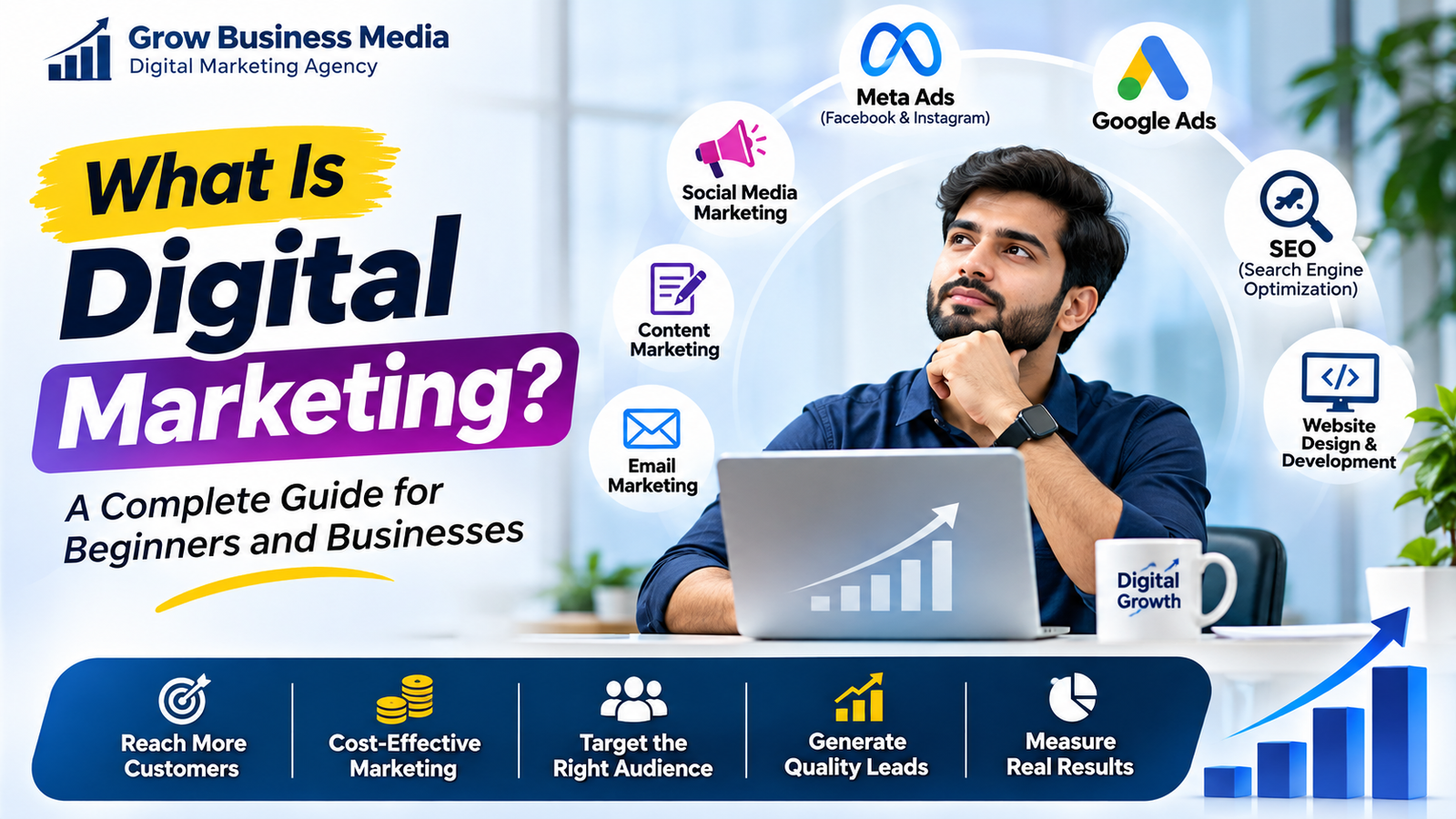
In today’s digital world, businesses are no longer limited to traditional marketing methods such as newspapers, television, banners, and pamphlets. With millions of people using the internet every day, digital marketing has become one of the most effective ways to reach potential customers, build brand awareness, and grow a business online.
But what exactly is digital marketing? How does it work, and why is it important for businesses?
In this complete guide, we will explain everything you need to know about digital marketing, its types, benefits, and how businesses can use it to achieve sustainable growth.
What Is Digital Marketing?
Digital marketing refers to the promotion of products, services, or brands through digital channels such as search engines, social media platforms, websites, email, and online advertising.
In simple words, digital marketing is the process of promoting your business online to connect with potential customers and generate sales.
For example:
- Running Facebook and Instagram advertisements to generate leads.
- Using Google Ads to reach people searching for your services.
- Improving your website’s ranking on Google through SEO.
- Creating engaging content to attract customers on social media.
- Sending promotional emails to existing and potential customers.
The main objective of digital marketing is to reach the right audience, at the right time, through the right digital platform.
Why Is Digital Marketing Important for Businesses?
Digital marketing has transformed the way businesses attract and communicate with customers. Whether you run a small local business, a startup, or an established company, online marketing can help you reach more potential customers.
Here are some major benefits of digital marketing:
1. Reach a Larger Audience
Digital marketing allows businesses to reach potential customers beyond their local geographical boundaries. With the right marketing strategy, you can promote your products and services locally, nationally, or internationally.
2. Cost-Effective Marketing
Compared to many traditional advertising methods, digital marketing offers flexible budgets. Businesses can start advertising with a small budget and increase their investment as they achieve better results.
3. Target the Right Customers
Platforms such as Meta Ads and Google Ads allow businesses to target audiences based on location, interests, demographics, search intent, and other available targeting signals.
This helps businesses connect with people who are more likely to be interested in their products or services.
4. Generate Quality Leads and Sales
Digital marketing helps businesses attract potential customers through websites, social media, search engines, and paid advertisements.
With an effective marketing funnel, businesses can convert interested visitors into leads and paying customers.
5. Measure Marketing Performance
One of the biggest advantages of digital marketing is the ability to track performance.
Businesses can measure:
- Website traffic.
- Cost per lead (CPL).
- Click-through rate (CTR).
- Conversion rate.
- Return on ad spend (ROAS).
- Customer acquisition cost (CAC).
These insights help businesses understand what is working and improve their marketing campaigns.
What Are the Different Types of Digital Marketing?
Digital marketing includes several strategies and channels. Each method serves a different purpose and can help businesses achieve specific marketing goals.
1. Search Engine Optimization (SEO)
Search Engine Optimization, commonly known as SEO, is the process of improving a website’s visibility in organic search engine results.
For example, when someone searches for “best digital marketing agency near me” on Google, SEO helps relevant websites appear in search results.
SEO includes:
- On-page SEO.
- Off-page SEO.
- Technical SEO.
- Keyword research.
- Content optimization.
- Link building.
SEO is a long-term strategy that helps businesses generate organic traffic without paying for every website click.
2. Social Media Marketing (SMM)
Social media marketing involves promoting a business, product, or service through social media platforms.
Popular social media platforms include:
- Facebook.
- Instagram.
- LinkedIn.
- YouTube.
- Pinterest.
Businesses use social media marketing to build brand awareness, engage with customers, share valuable content, and generate leads.
3. Pay-Per-Click Advertising (PPC)
Pay-Per-Click advertising is a paid digital marketing strategy in which advertisers pay when users click on their advertisements.
Google Ads is one of the most popular PPC advertising platforms.
Businesses can display advertisements on Google Search, YouTube, and other participating websites and platforms.
PPC advertising helps businesses reach potential customers who are actively searching for specific products or services.
4. Meta Ads (Facebook and Instagram Ads)
Meta Ads allow businesses to advertise on Facebook, Instagram, Messenger, and other eligible placements.
Businesses can use Meta Ads for:
- Lead generation.
- WhatsApp enquiries.
- Website traffic.
- Product sales.
- Brand awareness.
- Appointment bookings.
With suitable creatives, audience strategies, and campaign optimization, Meta Ads can help businesses generate leads and attract customers.
5. Content Marketing
Content marketing is the process of creating and sharing valuable, relevant, and engaging content to attract and retain a target audience.
Common content marketing formats include:
- Blog posts.
- Videos.
- Infographics.
- Social media posts.
- Case studies.
- Educational guides.
High-quality content helps businesses build trust, establish authority, and attract potential customers.
6. Email Marketing
Email marketing involves sending promotional messages, newsletters, offers, and business updates directly to customers through email.
It is useful for:
- Building customer relationships.
- Promoting new products.
- Sharing special offers.
- Generating repeat purchases.
- Retaining existing customers.
7. Website Design and Development
A professional website is an important part of a successful digital marketing strategy.
Your website acts as your business’s online identity and provides customers with information about your products, services, contact details, and offers.
A well-designed website can improve user experience, build credibility, and convert visitors into customers.
How Does Digital Marketing Work?
Digital marketing works through a combination of different online channels and strategies.
Here is a simple digital marketing process:
Step 1: Identify Your Target Audience
Understand who your potential customers are, what they need, and which platforms they use.
Step 2: Set Marketing Goals
Define your objectives, such as generating leads, increasing sales, improving website traffic, or building brand awareness.
Step 3: Choose the Right Marketing Channels
Select suitable platforms such as Google Ads, Facebook, Instagram, SEO, and email marketing.
Step 4: Create High-Quality Content and Advertisements
Develop attractive creatives, engaging content, landing pages, and compelling offers.
Step 5: Launch Marketing Campaigns
Start your campaigns and reach your target audience through the selected digital channels.
Step 6: Track and Optimize Performance
Monitor campaign performance, analyze results, and make improvements to achieve better outcomes.
Digital Marketing vs Traditional Marketing
Both digital and traditional marketing help businesses promote their products and services. However, they differ in their approach, targeting, and measurement.
| Digital Marketing | Traditional Marketing |
|---|---|
| Online promotion | Offline promotion |
| Social media and search engines | Newspapers and television |
| Flexible advertising budgets | Often higher fixed costs |
| Detailed performance tracking | Limited performance tracking |
| Audience targeting options | Often broader audience reach |
| Interactive communication | Mostly one-way communication |
Digital marketing offers businesses more flexible targeting and measurable performance, making it an important part of modern marketing strategies.
Who Needs Digital Marketing?
Almost every business can benefit from digital marketing, regardless of its size or industry.
Some examples include:
- Local Businesses: Spas, salons, restaurants, gyms, and clinics can generate local enquiries and bookings.
- Real Estate Businesses: Builders and property dealers can generate leads from interested buyers.
- E-commerce Businesses: Online stores can increase product visibility and sales.
- Educational Institutions: Schools, colleges, and coaching institutes can attract student enquiries.
- Professional Services: Consultants, accountants, and agencies can connect with potential clients.
- Startups: New businesses can build brand awareness and reach their target audience.
Whether you are starting a new business or managing an established company, digital marketing can help you compete in the online marketplace.
How to Choose the Right Digital Marketing Strategy?
There is no single marketing strategy that works for every business. Your approach should depend on your business goals, target audience, industry, and budget.
For example:
- If you want immediate enquiries, consider Meta Ads or Google Ads.
- If you want long-term organic traffic, invest in SEO.
- If you want to build brand awareness, focus on social media marketing.
- If you want to improve online credibility, develop a professional website.
- If you want repeat customers, consider email marketing and remarketing.
The best approach is often a combination of multiple digital marketing channels.
Conclusion: Grow Your Business with Digital Marketing
Digital marketing is no longer just an option for businesses; it has become an essential part of modern business growth.
From building brand awareness and attracting potential customers to generating quality leads and increasing sales, the right digital marketing strategy can help businesses achieve their goals.
However, successful digital marketing requires proper planning, audience research, quality content, continuous optimization, and a clear understanding of business objectives.
If you want to grow your business online, now is the right time to invest in digital marketing.
Frequently Asked Questions (FAQs)
1. What is digital marketing in simple words?
Digital marketing is the promotion of products and services through online platforms such as Google, Facebook, Instagram, websites, and email.
2. What are the 7 types of digital marketing?
The seven popular types are SEO, social media marketing, PPC advertising, Meta Ads, content marketing, email marketing, and website marketing.
3. Is digital marketing good for small businesses?
Yes. Digital marketing helps small businesses reach targeted audiences, promote their services, generate leads, and compete with larger brands using flexible budgets.
4. How much does digital marketing cost?
The cost depends on your business goals, marketing channels, competition, and advertising budget. Businesses can start with smaller budgets and scale their campaigns as they grow.
5. How long does digital marketing take to show results?
Paid advertising can generate enquiries relatively quickly, depending on the campaign and offer. SEO and organic content marketing generally require consistent effort over several months.
6. Can I grow my business through digital marketing?
Yes. With the right strategy, targeting, content, website, and campaign optimization, digital marketing can help businesses increase visibility, generate leads, and grow sales.
Ready to Grow Your Business Online?
At Grow Business Media, we help businesses build a strong online presence and generate potential customers through result-oriented digital marketing solutions.
Our services include:
- Meta Ads (Facebook and Instagram Ads)
- Google Ads
- Search Engine Optimization (SEO)
- Website and App Development
- Content Creation
- Graphic Design and Video Editing
Let’s turn your business goals into digital growth opportunities!
Contact Grow Business Media today and take your business to the next level.